What Tv Stations Can You Get With an Antenna
Putting upwards a TV antenna is one of the best steps you tin take toward breaking your reliance on pay Television receiver and saving hundreds of dollars a year. Virtually areas of the U.South. have access to betwixt 50 and 100 Boob tube stations that broadcast over the air for free.
As a bonus, they'll make your big-screen TV shine. Over-the-air Television set signals are typically compressed less than cable or satellite broadcasts, and then pictures will announced either the aforementioned quality or better. All the major broadcast networks now transmit in loftier-definition, and in some areas, broadcasts using the new ATSC 3.0 standard–aka NextGen Tv–are also bachelor.
Then, here's how yous get about choosing the right antenna for you.
- Make up one's mind which channels are available where you live
- Cull which channels you desire to watch
- Effigy out which type of antenna you need
- Select the antenna
Which channels are available on an antenna?
Your first footstep is figuring out which channels are available where you alive and of those, which ones yous want to lookout.
To do this, caput over to Rabbit Ears. It pairs the FCC's broadcast TV database with topographical maps to give you a pretty detailed interpretation of which signals will reach your business firm and how strong they'll be.
Select the "Bespeak Search Map" and either zoom in on the map to your house or endeavour entering the address in the search box. I have mixed results with the search box so zooming might exist better. Once your house is in the center of the map, click the "Move Pushpin to Eye of Map View" push beneath the map.
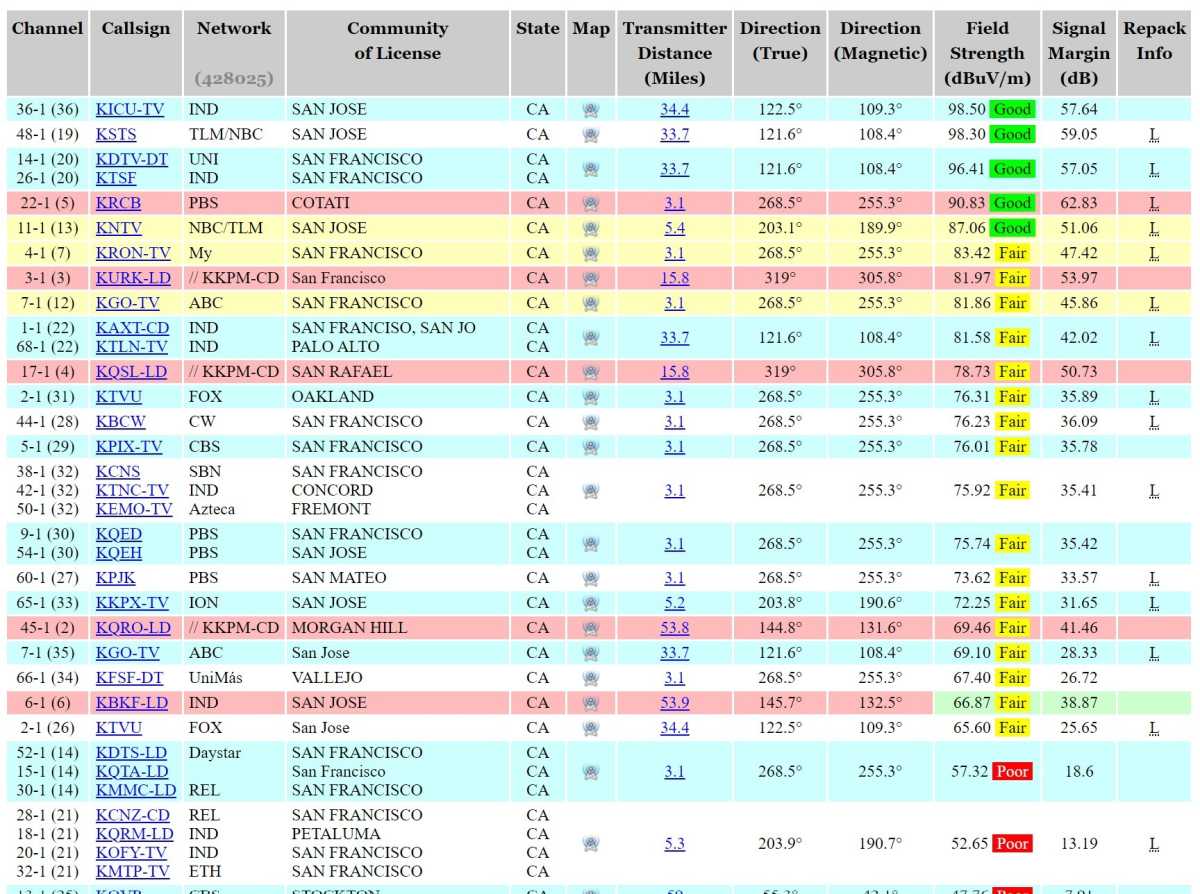
Click "Get" and you'll get something like this in render:
Martyn Williams / IDG
That nautical chart above looks pretty complicated, only information technology'due south really not. The strongest signals are at the top and weakest at the bottom. Keep this page open in a browser tab.
The nautical chart lists predicted signal level at your home from strongest at the top to weakest at the lesser. The first number shows the aqueduct number advertised on air and the number in brackets is the actual channel number (for more on this, read on). And so are details of the TV network, station name and altitude from the transmitter. Reception depends a lot on local conditions, but whatever the environment, it starts getting difficult higher up 50-75 miles.
The listing besides includes the direction of the transmitter, which is important. Non all Tv set signals you want will necessarily come up from the same identify!
Which channels practise I want to watch?
Your adjacent step is to figure out which stations yous want to lookout man. After all, there's no signal wasting time trying to go weak stations if all your favorite shows are on stiff ones.
You tin can check a TV listing guide to see everything that's on the air in your local area and brand a list of which stations you want to sentinel. You'll probably need to enter your zip lawmaking and be sure to choose "antenna" or "over the air" equally your TV provider in the online programme guide, so you don't go cable channels mixed in.
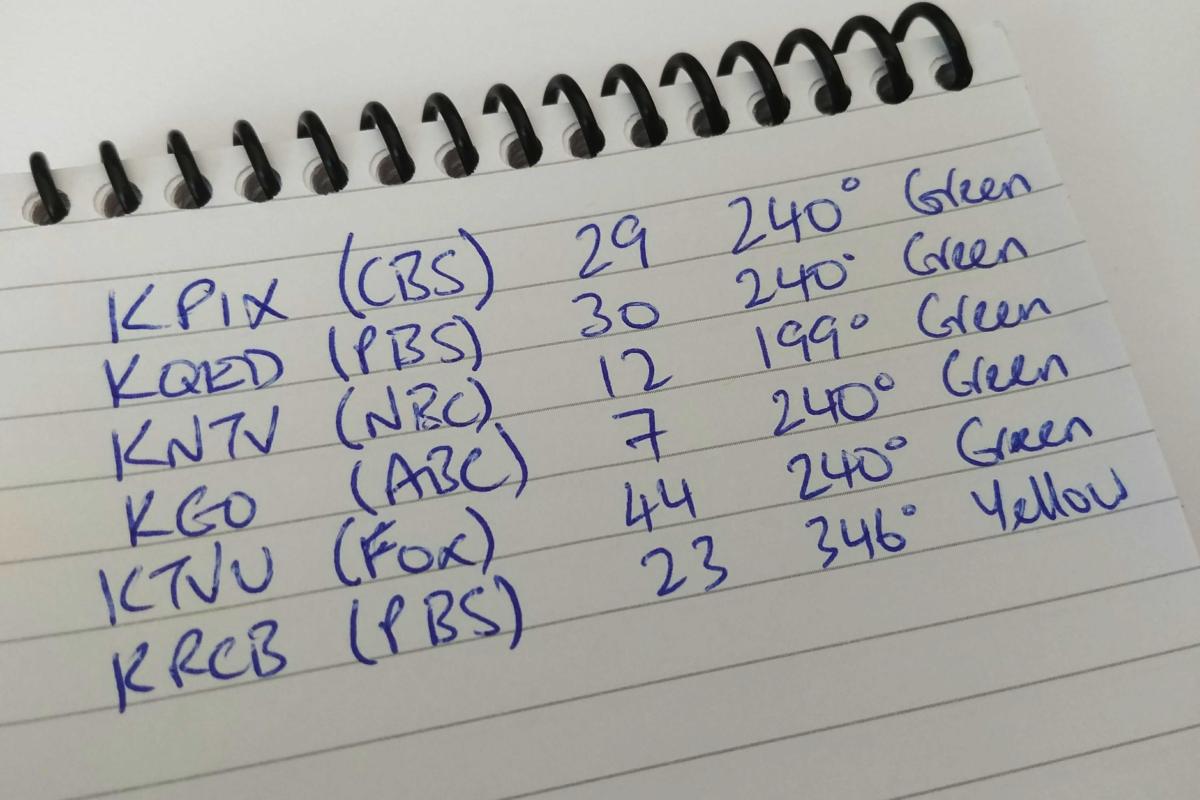
One time you've made your listing, examine the Rabbit Ears results to notice the channels you want to sentinel. Write downwards the number in parenthesis, which is the "real channel," the "Direction (true)," and the color (light-green, yellow, or cerise). The colors will inform you if an indoor antenna will be sufficient, or if y'all'll need an attic or roof-mounted model to pull them in.
Information technology's important to retrieve than an indoor antenna is always going to be a compromise. Y'all will ever get better results with an outdoor antenna.
Indoor antennas–like our current favorite low-priced antenna (the Channel Master Flatenna 35) and our favorite amplified antenna (the Winegard FlatWave Amped)–are typically flat, so they're easy to set up, unremarkably by hanging them in a window on the side of the firm facing the transmitter. Some await different but the principle is the same: Install them in a favorable location.
Indoor antennas are typically fine for all the potent local channels, simply if you want channels that are weaker or further abroad, you might need to go larger and put an antenna in your cranium space or on your roof.
At that place are several excellent options including our current acme pick for cranium installation, the Winegard Aristocracy 7550, and for a roof-mount, the Antennas Directly DB8e.
Martyn Williams / IDG
If yous install your antenna in the attic, you'll probably become slightly less signal than if it was on the roof considering it'due south an enclosed space, but it might be enough to get stable Television reception. If you lot hate the expect of an outdoor antenna, and then experiment. An attic-mounted antenna volition also be easier to maintain.
The direction of the Television transmitter belfry is too important. If yous're using an indoor antenna, you lot'll desire to put it in a window facing that direction. If you're using an outdoor antenna, it should exist pointed in that direction. As signals get weaker, going from green to yellow to red, the direction becomes more important. If you desire to tune in weaker stations from towers in unlike directions, you lot'll probably need a rotator. This motorized device volition plough the antenna so that it's oriented to pull in those weaker signals.
Knowing the existent channel number will help you select an antenna. Telly dissemination in Northward America is spread across 3 frequency bands: VHF-Low (channels ii through 6), VHF-High (channels 7 through 13), and UHF (channels 14 through 51). Considering of the unlike frequencies in apply, antennas are designed to cover one, two, or three bands. Non every antenna covers them all.
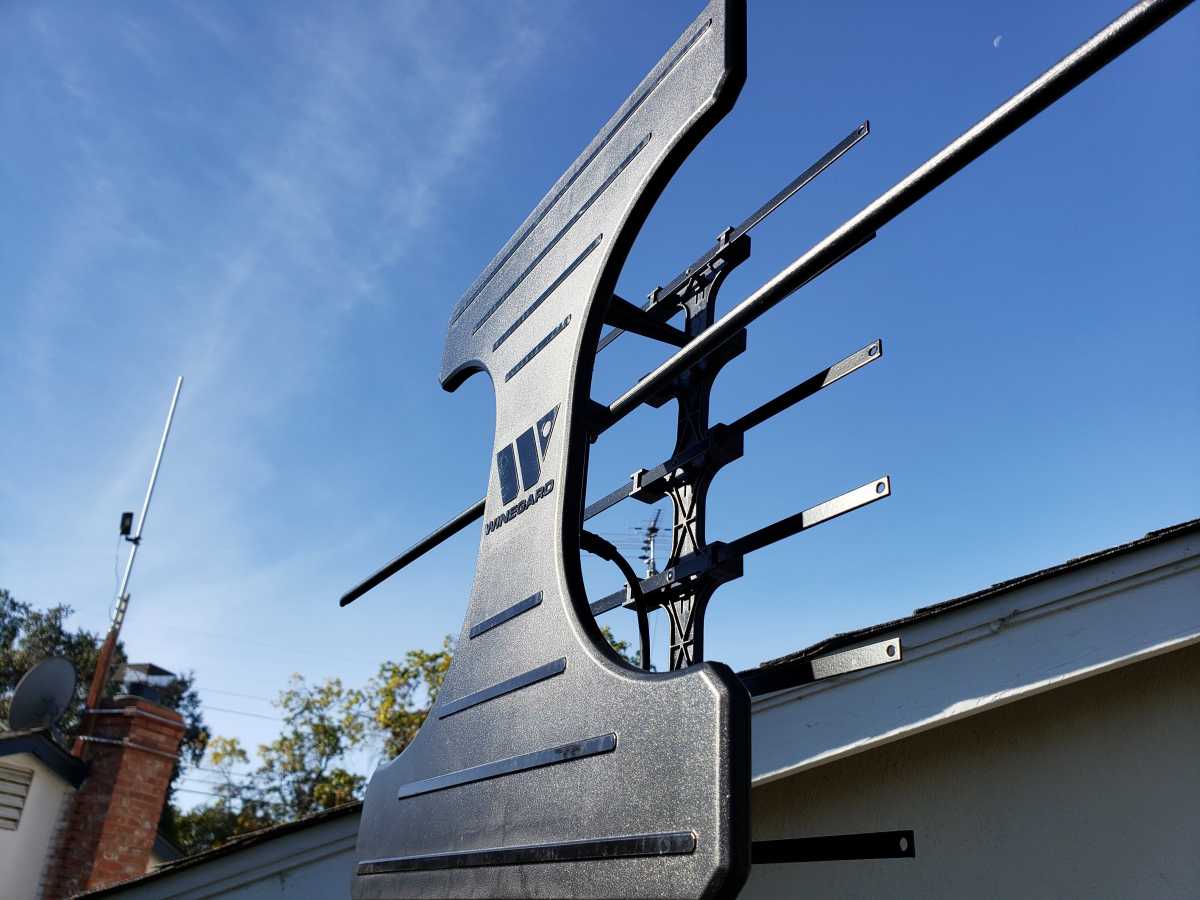
The Winegard Elite 7550
Martyn Williams / IDG
The real aqueduct number helps you figure this out. After Tv set stations went digital, some shifted channels but kept announcing the channel number everyone knew. For case, aqueduct 5 in San Francisco is actually broadcasting on aqueduct 29. That'southward why the existent aqueduct is of import in antenna choice.
Most antennas, especially those for indoor and attic employ, are designed for VHF-High and UHF reception. Some outdoor antennas for roof mounting only cover a single ring. TechHive'southward antenna reviews annotation this. Antennas for VHF-Depression stations are harder to come by, but those frequencies are generally used by smaller stations that may transmit at lower power.
Be prepared to put up with a lot of marketing speak when checking out antennas. For the record, in that location is no such matter every bit an "Hd" antenna or "digital" antenna—the format of the signals beingness received doesn't matter—and take those "miles" range claims in the product specifications with a grain of common salt. No manufacturer tin guarantee their antenna will pull in a indicate from a given number of miles considering likewise much depends on local topology, point strength, interference, and other factors unique to your location.
Having said that, those range claims are useful in evaluating antennas from the aforementioned manufacturer. It's a good bet that an antenna that claims 65 miles of range is more often than not better for long-distance reception than one from the same visitor that claims to deliver thirty miles of range.
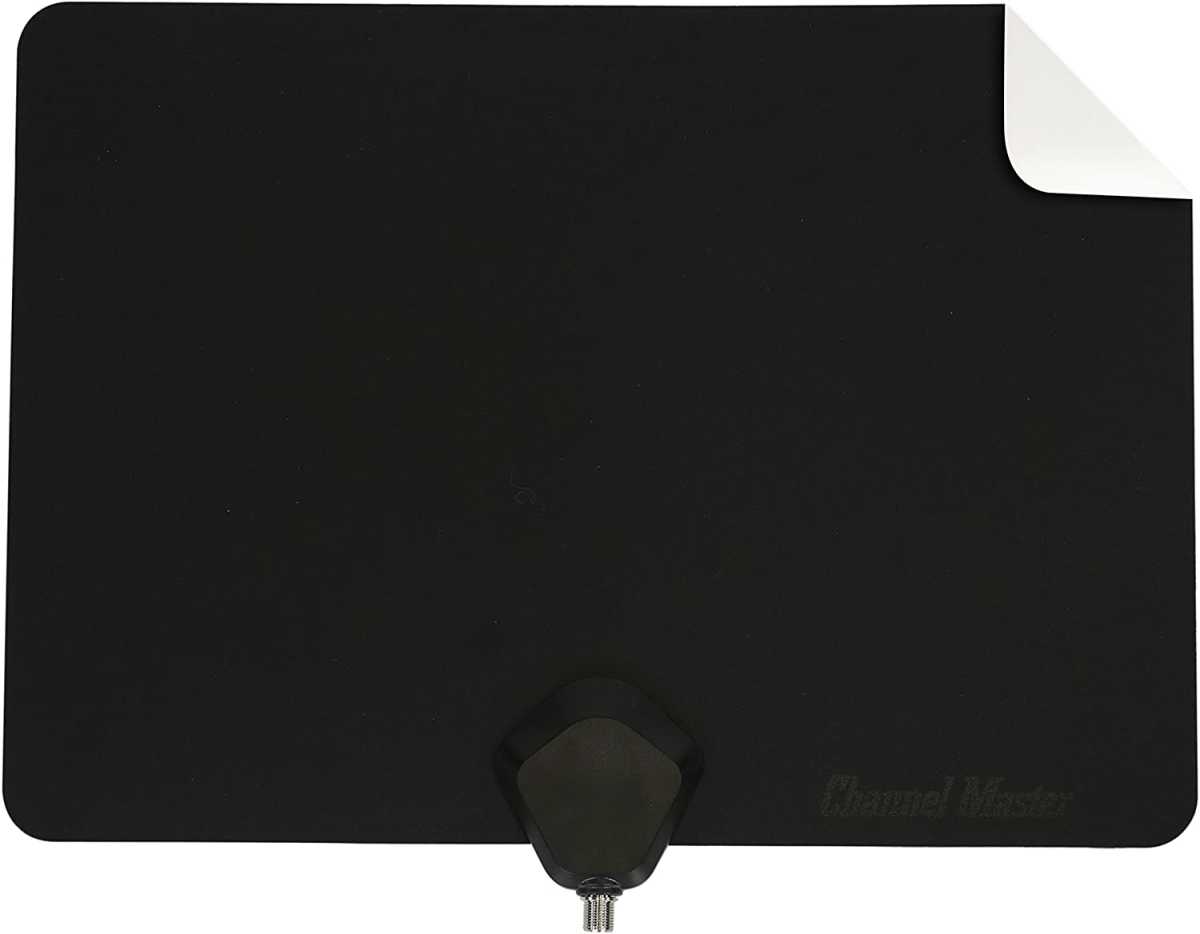
Apartment indoor antennas, such as this Channel Principal model, are easy to deploy. But ensure yous mount them in a adept location based on where your local broadcast towers are situated.
Aqueduct Primary
Analyzing your list
In the example above from the Rabbit Ears website, an indoor antenna will probably pull in all the green channels, and the same antenna volition besides likely work for some of the yellow "fair" channels, merely as you go down the list information technology becomes more and more important to have a good outdoor antenna.
The lower stations on the list will crave more work and those in cherry-red, marked "poor" might be incommunicable to receive without significant work or luck. If your TV stations are coming from many directions, you might demand a second antenna or a rotator. But, before you spend as well much coin, try an antenna and see what you can pull in. If your reception is mediocre, you'll need to decide if you want to buy extra equipment to pull in more stations.
Practice I need a signal amplifier or a rotator?
If you lot're unable to receive distant TV stations due to depression signal levels, you should consider a signal amplifier. It's ever best to collect as much signal as possible at the antenna, and then don't skimp on a small ane and try to make up for it with an amplifier.
Simply if a large antenna still won't pull in the station without picture break-upwardly, a signal amplifier might help. You also might need one if you have an excessively long run of cablevision, say from a distant spot on a piece of land to a house.
TechHive recommends one of the models from Channel Master, such as the CM-7777 Titan 2. It mounts onto the antenna mast and is fed with ability through the coaxial cable.
A rotator will turn the TV antenna in any direction with the click of a remote. These are useful if you want to receive weaker stations from several different locations, although it's worth testing out if a fixed antenna volition go all your stations earlier investing in a rotator.
Many antennas do a good task pulling in stations from different directions, especially if they are strong, local signals. If you do need a rotator, the Channel Primary CM-9521HD is an splendid option.
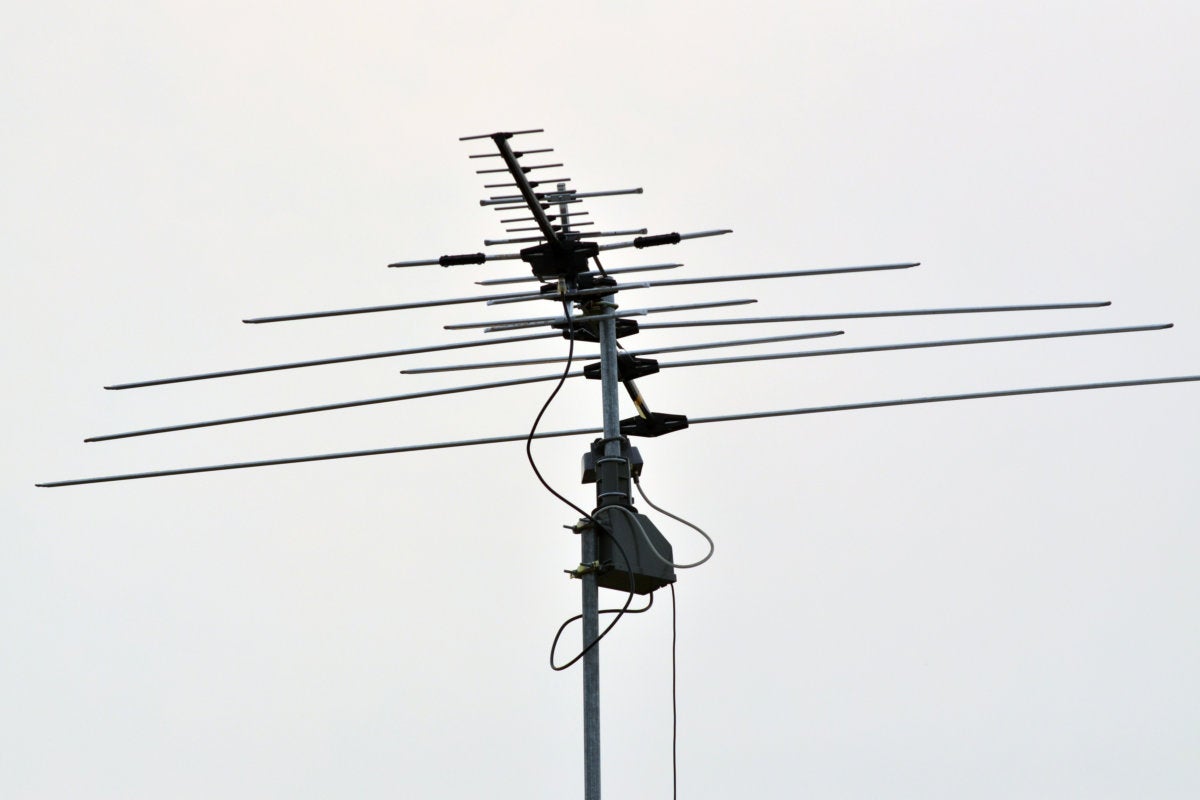
A TV antenna with rotator installed.
What blazon of cablevision do I need for a Goggle box antenna?
The connectedness from your antenna to your TV is every bit as important every bit the antenna itself. You need a high-quality coaxial cablevision ("coax" for short) for the job. Coax has a center wire that carries the signal and is surrounded by a plastic insulator. Then there'south an outer braid that shields the center cable from interference, and an outer sheath to protect the cable from the elements.
If you're ditching satellite for over-the-air Television receiver, y'all tin probably utilize the existing coaxial cable from the satellite dish, just if information technology doesn't work, be prepared to buy and run new coax. Brand the cable a single run if possible considering each time you lot connect shorter cables together, a footling point is lost. The almost common type of cablevision for TV is called RG-6.
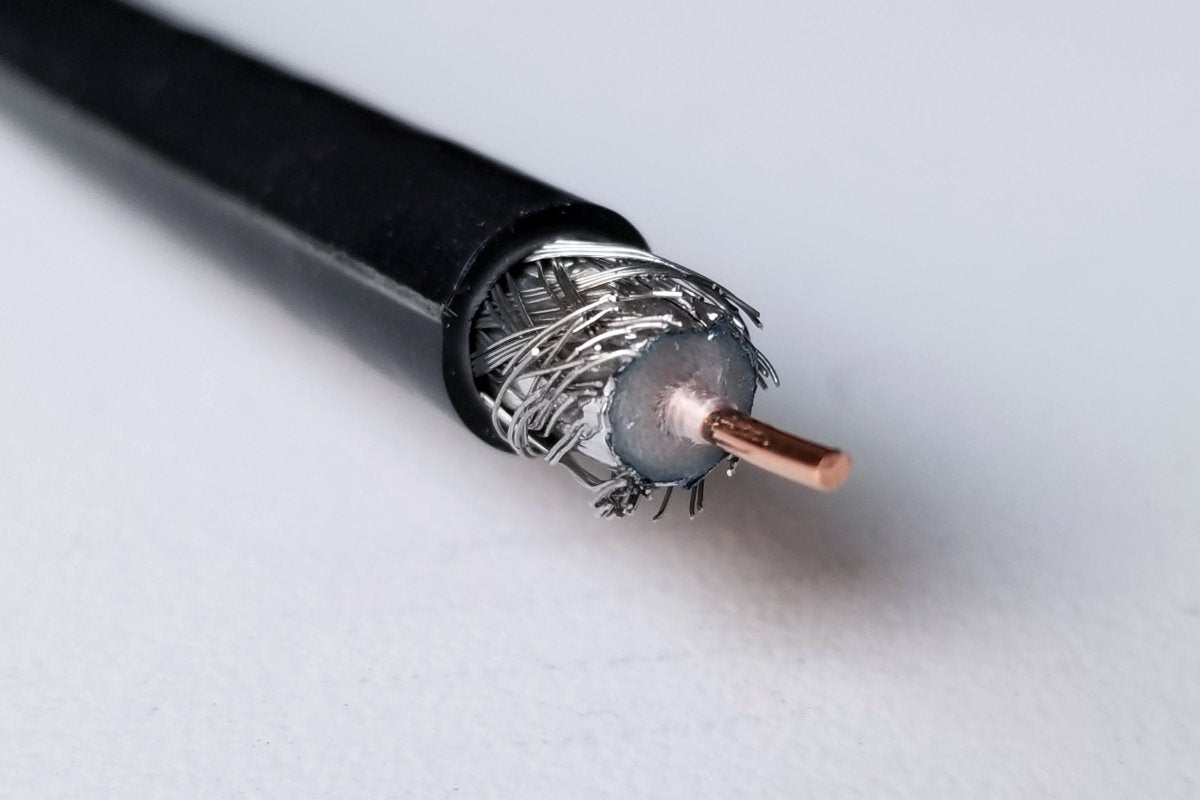
A piece of coaxial cable cut and ready for a connector to be attached.
Martyn Williams / IDGA final word of advice
Predicting which antenna will work with certainty is about impossible. The information garnered from sites like Rabbit Ears will provide a stiff indication of what should work, just in that location are other variables at work.
In some areas, especially in cities or areas with lots of hills, signals can bounce off obstacles like buildings and crusade interference, trees can abound leaves in the bound and cake stations y'all got fine in the winter, and atmospheric conditions can alter the manner signals accomplish your house.
Moving an antenna merely a petty to one side or upwards and down a window can have a big outcome on reception. If you're putting up an external antenna, one side of your roof might bring in nothing while the other side provides perfect reception.
Exist prepared to experiment.
Note: When you lot purchase something subsequently clicking links in our articles, we may earn a small committee. Read our chapter link policy for more details.
Martyn Williams produces technology news and production reviews in text and video for PC World, Macworld, and TechHive from his abode outside Washington D.C.. He previously worked for IDG News Service as a contributor in San Francisco and Tokyo and has reported on technology news from beyond Asia and Europe.
Source: https://www.techhive.com/article/582917/which-tv-antenna-should-i-buy.html
0 Response to "What Tv Stations Can You Get With an Antenna"
Post a Comment